How to Improve Writing Accuracy in Kids: Practical Tips for Parents
_____________Education
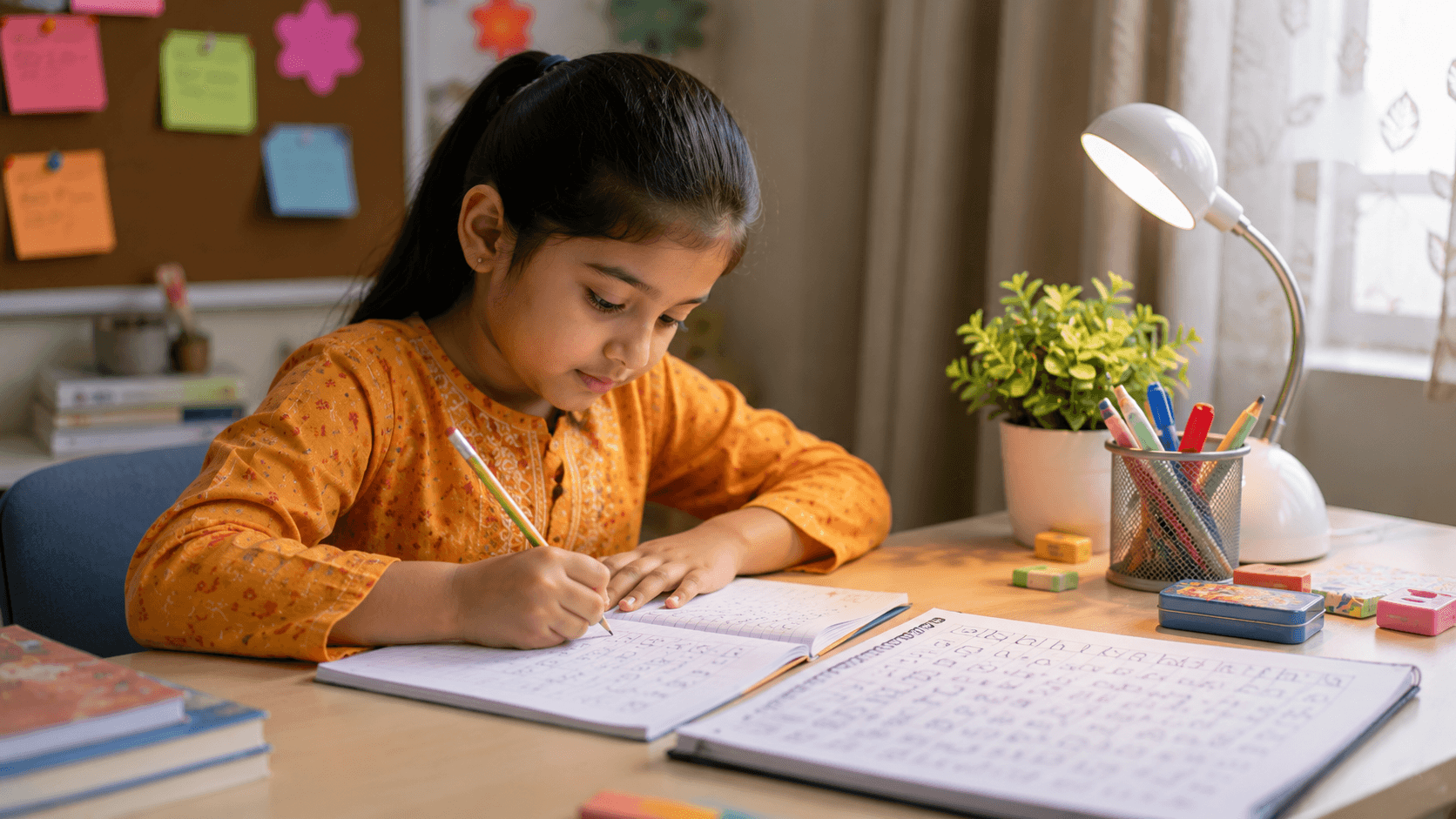
When parents think about writing accuracy, the first things that usually come to mind are spelling mistakes, untidy handwriting or forgotten punctuation. These are certainly part of the picture, but they are rarely where the real problem begins. By the time an error appears on the page, several decisions have already been made inside the child's mind. The mistake is simply the final outcome of a writing process that may have gone off track much earlier.
This is one reason teachers often look beyond individual errors. After reading hundreds of notebooks over the course of a school year, they begin recognising patterns that are easy to miss when looking at a single assignment. One child consistently loses accuracy in longer answers, another writes well until ideas become more complex, while someone else struggles only when writing under time pressure. These observations tell teachers far more than a page covered in corrections because they reveal how the child writes rather than just what was written incorrectly.
Improving writing accuracy, therefore, is not about chasing every mistake with a red pen. It is about understanding the habits that quietly produce those mistakes again and again.
Accuracy Is Built Through Habits That Often Go Unnoticed
Children rarely wake up one morning and suddenly become accurate writers. The change is gradual and usually develops through small behaviours that adults barely notice at first. These habits are not dramatic, yet together they influence almost every piece of writing a child produces.
Teachers often see progress beginning with simple changes such as:
- taking a few seconds to understand the question before writing
- finishing one idea completely before moving to the next
- rereading a sentence when it feels incomplete instead of waiting until the end
- slowing down naturally during longer explanations without being reminded
None of these behaviours directly teach grammar or spelling, but they reduce many avoidable mistakes because they encourage children to stay mentally connected to what they are writing. As these habits become automatic, accuracy improves without children consciously thinking about every rule they have learnt.
This also explains why two children with similar academic ability can produce very different written work. The difference is often not what they know but how they manage their attention while writing.
Why More Practice Doesn't Always Lead to Better Writing
It is easy to assume that the solution is simply to make children write more. Practice certainly plays an important role, but teachers frequently observe that quantity and improvement do not always move together. Some children complete pages of extra writing every week yet continue repeating exactly the same mistakes. Others write less frequently but show steady progress because each activity helps them become more aware of their own writing habits.
Purposeful practice has a different objective from repetitive practice. Instead of measuring success by the number of pages completed, it encourages children to notice what happened while they were writing. Did they rush through the final paragraph? Did they forget punctuation once the answer became longer? Did they lose track of the original question halfway through the response?
These reflections are valuable because they gradually shift children's attention from correcting mistakes after writing to preventing them while writing. Over time, that change becomes far more powerful than completing another worksheet filled with similar exercises.
Children also benefit when writing is treated as part of everyday learning rather than an isolated English activity. Describing a science experiment, explaining the steps of a maths solution or summarising a story all strengthen the ability to organise thoughts clearly before putting them on paper. The more often children connect thinking with writing, the more naturally accuracy begins to develop across different subjects instead of appearing only during language lessons.
The Best Writers Are Not the Fastest Writers
Speed is often mistaken for writing ability, especially in the early school years. Children who finish first are frequently seen as confident writers, while those who take longer are assumed to be struggling. In reality, teachers know the relationship is far more complicated. Many children who write quickly produce work that requires extensive correction, whereas others who spend a little more time planning and reviewing often submit writing that is clearer, more organised and noticeably more accurate.
The difference lies in how children use those extra moments. Strong writers are not constantly stopping because they are confused. They pause because they are making decisions. They are checking whether the sentence expresses the idea they intended, whether the next paragraph follows naturally from the previous one or whether a simpler word communicates the thought more effectively. These small moments of reflection rarely make writing feel slow, but they prevent a surprising number of mistakes from appearing in the first place.
This is why encouraging children to "finish quickly" can sometimes send the wrong message. A better goal is helping them develop a writing rhythm that allows enough time for thinking without making the process feel stressful. As children mature, they gradually learn that accuracy is not about writing slowly; it is about giving every important idea the attention it deserves before moving on.
Every Child Has a Different Pattern of Mistakes
One of the reasons generic writing exercises produce mixed results is that children rarely make the same kinds of mistakes. Looking closely at a classroom of twenty students often reveals twenty different writing patterns. Treating all of them in exactly the same way means some children receive practice they do not actually need, while others continue struggling with habits that remain unnoticed.
Teachers often describe recurring patterns like these:
- Some children lose accuracy when answers become longer because maintaining attention over several paragraphs is still developing.
- Others organise ideas well but frequently overlook punctuation once they become absorbed in explaining a concept.
- A few think faster than they write, causing skipped words or incomplete sentences that make perfect sense to them but confuse the reader.
- Some become so focused on neat handwriting that their attention shifts away from sentence construction and vocabulary.
Recognising these patterns changes the purpose of practice. Instead of asking every child to complete identical writing tasks, teachers can guide them towards the habit that needs the greatest attention. For one child, the priority may be organising ideas before writing. For another, it may be learning to review each paragraph before continuing. Improvement becomes more meaningful because it addresses the underlying habit rather than only correcting the visible mistake.
Feedback Changes Writing Only When Children Understand It
Children receive feedback throughout their school years, yet not all feedback leads to improvement. A notebook filled with corrections can sometimes overwhelm young learners because it tells them what was wrong without helping them understand why it happened. After a few assignments, they begin recognising red marks without recognising the habits that continue producing them.
Effective feedback tends to be far more selective. Rather than correcting every single error, experienced teachers often focus on one or two recurring patterns that will have the greatest long-term impact. A child who repeatedly forgets punctuation benefits more from understanding that single habit than from seeing twenty unrelated corrections across the page. Once that habit improves, attention naturally shifts to the next area of development.
Parents can support this approach at home by discussing writing as a process instead of judging it only by the final result. Questions such as "Which part felt easiest to write?", "Where did you stop to think?" or "Was there any sentence that didn't sound right when you read it again?" encourage children to reflect on their own writing decisions. Over time, these conversations build awareness, and awareness is often the first step towards lasting improvement.
When children begin recognising their own writing patterns instead of waiting for someone else to point them out, accuracy gradually becomes something they control themselves. That transition is slow, but it is also the stage where genuine progress begins to take shape.
Accuracy Is a Skill That Grows With Every Piece of Writing
Parents often hope there will be a point when children simply "stop making mistakes." In reality, writing does not improve in that way. Even experienced writers review their work, change words, rewrite sentences and discover ideas that could have been expressed more clearly. The difference is not that they avoid mistakes altogether; it is that they have developed habits that help them recognise and correct those mistakes before someone else has to point them out.
Children follow the same journey. As they write more across different subjects, they gradually become better at organising thoughts, expressing ideas with greater clarity and reviewing their own work with a more critical eye. Progress is rarely visible from one assignment to the next, but it becomes remarkably clear when notebooks are viewed over several months. Answers become easier to follow, unnecessary corrections reduce and writing begins to reflect confidence rather than hesitation.
This is why writing accuracy should never be measured by a single test or worksheet. It develops through hundreds of ordinary writing experiences in classrooms, at home and during everyday learning. Every opportunity to explain an idea, describe an event or answer a thoughtful question contributes to habits that eventually become part of the child's natural writing process.
Parents play an equally important role in this journey. Instead of focusing only on marks or counting the number of mistakes on a page, it is often more helpful to notice the improvements that are easy to overlook. Perhaps your child now completes ideas more clearly than before, rereads difficult answers without being reminded or takes a little more time to think before beginning to write. These small changes may seem insignificant individually, but together they form the foundation of accurate, confident writing.
When children learn to value clear communication over simply finishing quickly, writing gradually becomes less about avoiding mistakes and more about expressing ideas thoughtfully. That is the stage where accuracy stops feeling like a classroom rule and starts becoming a lifelong skill.
If you're looking to strengthen these habits from an early age, YoungLabs' online handwriting and writing programmes combine guided writing practice with personalised teacher feedback, helping children improve not only the appearance of their writing but also its clarity, organisation and overall accuracy. The focus is on building writing habits that stay with children long after individual lessons are over.
Frequently Asked Questions
1.At what age should children start focusing on writing accuracy?
Children begin developing writing accuracy as soon as they start writing independently. In the early years, the emphasis should be on expressing ideas clearly while gradually introducing spelling, punctuation and sentence structure appropriate for their age.
2.Why does my child make the same writing mistakes repeatedly?
Repeated mistakes usually indicate a writing habit rather than a lack of knowledge. Children often benefit more from identifying recurring patterns than from correcting individual errors in isolation.
3.Does reading help improve writing accuracy?
Yes. Regular reading exposes children to correct sentence structure, punctuation, vocabulary and natural language patterns, all of which support more accurate writing over time.
4.Is handwriting connected to writing accuracy?
Although they are different skills, handwriting and writing accuracy influence one another. When handwriting becomes more fluent and automatic, children can devote more attention to organising ideas and reducing writing errors.
5.How can parents improve writing accuracy at home?
Encourage children to write regularly for meaningful purposes, discuss their ideas before they begin writing, and review completed work together by asking reflective questions rather than pointing out every mistake immediately.