Phonics
Hearing, saying and decoding sounds.
- Letter sounds said and written
- Blending sounds into words
Ages 5–13 · Live English
Confident English
Complete English Program — reading, confident speaking, vocabulary, writing and grammar.
For the child who knows the answer but will not raise a hand. Fluency and communication they can use in school.
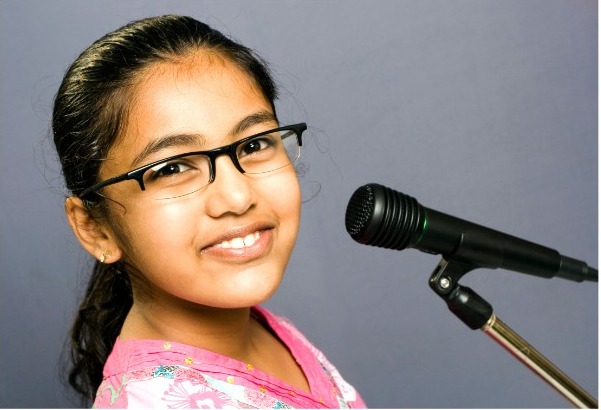


Most English classes teach
Confident English builds
Phonics, reading, listening, speaking and writing — plus vocabulary and grammar in every class. A complete English programme, not five separate tuitions.

Hearing, saying and decoding sounds.
Fluency, comprehension, and vocabulary in context.
Following, understanding, and responding.
Fluency, pronunciation, and communication — including speaking to a group.
Grammar and expression, from first sentences to a structured essay.
Every level teaches the five skills together. What changes is the balance.
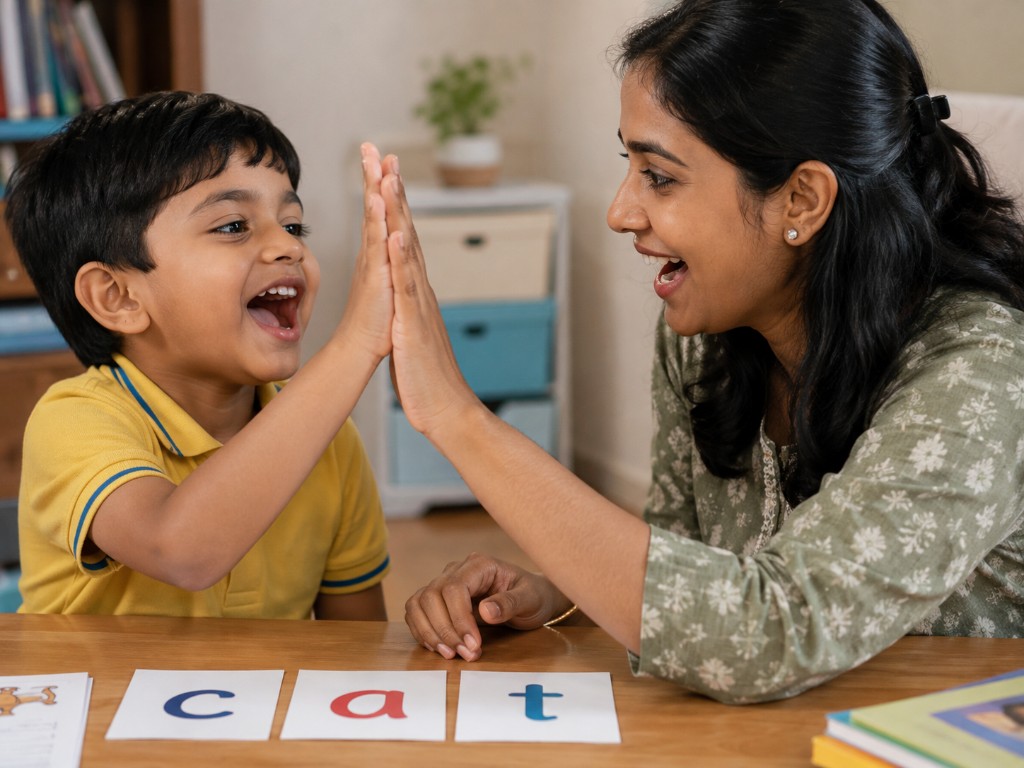
Sounds become words, words become short texts, and the child starts answering in full sentences.

Grammar in use, not as labels. Paragraphs that hold together. Reading fluent enough to think about meaning.
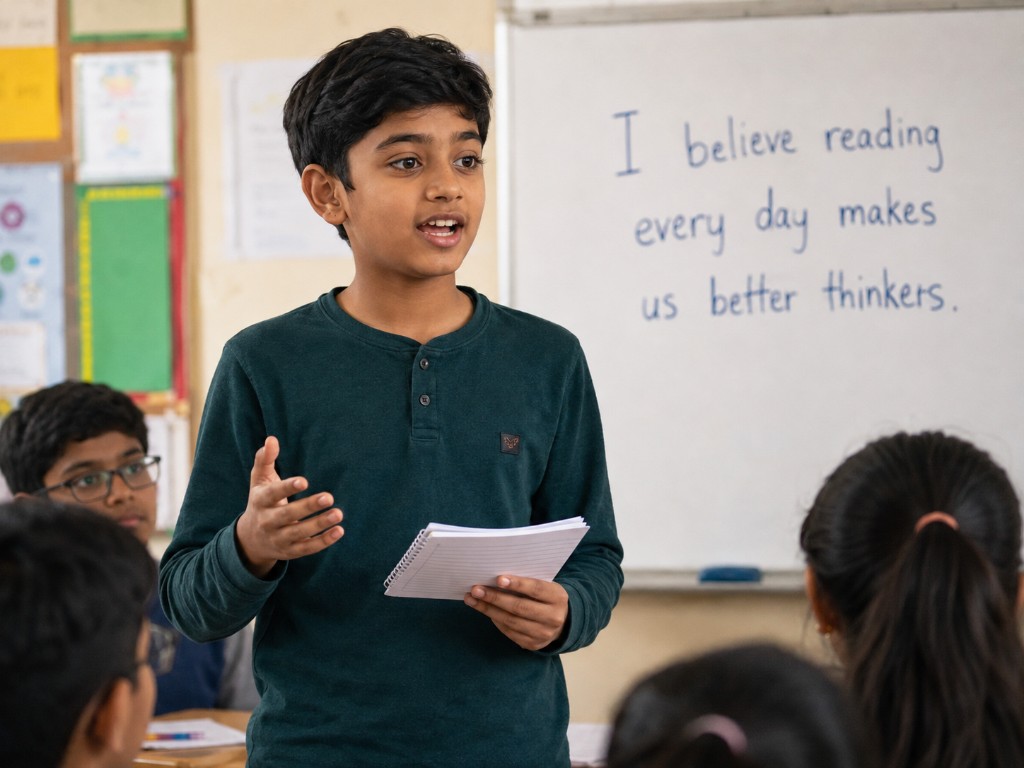
An opinion with structure. An essay that finishes. A child who can speak to a room from notes.
Level 1 · Unlock · Pre-A1
“I can sound out and read simple words.”
Typical ages 5–6
Level 2 · Unlock · A1
“I can read short texts and talk about them.”
Typical ages 6–7
Level 3 · Build · A2
“I can use correct grammar and write a paragraph.”
Typical ages 7–9
Level 4 · Build · A2–B1
“I can read fluently and write a clear piece.”
Typical ages 9–10
Level 5 · Express · B1
“I can speak with structure and hold an opinion.”
Typical ages 10–12
Level 6 · Express · B1–B2
“I can read anything meant for my age, write a clear essay, and speak to a room.”
Typical ages 12–13
A short assessment of the five skills shows which two levels to start on. Use this map as a guide.
| L1 | L2 | L3 | L4 | L5 | L6 | |
|---|---|---|---|---|---|---|
| Age | 5–6 | 6–7 | 7–9 | 9–10 | 10–12 | 12–13 |
| CEFR | Pre-A1 | A1 | A2 | A2–B1 | B1 | B1–B2 |
| India | UKG–1 | 1–2 | 2–4 | 4–5 | 5–7 | 7–8 |
| UK | Year 1 | Year 2 | Year 3–4 | Year 5 | Year 6–7 | Year 8–9 |
| North America | Kindergarten | Grade 1 | Grade 2–3 | Grade 4 | Grade 5–6 | Grade 7–8 |
| Australia | Prep/Year 1 | Year 1 | Year 2–3 | Year 4 | Year 5–6 | Year 7–8 |
L1 · Unlock
L2 · Unlock
L3 · Build
L4 · Build
L5 · Express
L6 · Express
Age picks the two starting levels, not school grade. In the Gulf, use the row that matches your child’s school curriculum — Indian, British or American.

40 live classes of 50 minutes, plus 12 enrichment sessions — GK, handwriting and spelling — in every one of the six levels. Two classes a week. About five months to complete a level. A 12-month plan covers two consecutive levels from level selection.
Up to four children. If only one child is enrolled, the class runs 30 minutes until the batch fills.
One-to-one sessions for concentrated practice.
Longer one-to-one with senior teachers.

Before: Knows the answer, will not raise a hand
After: Answers in a full sentence
Before: Grammar on paper only
After: The same grammar said, heard, and written
Before: Reads words but not the idea
After: Reads a text and talks about it
Before: The teacher talks most of the class
After: The child talks every session
Before: Hesitates while speaking; weak vocabulary and grammar
After: Speaks fluently, with clearer grammar and a wider vocabulary
Prices shown for your country.
6 months · 1 level
Loading price for your country…
12 months · 2 levels
Loading price for your country…
Sanjeev Sharma, founder of Younglabs, designed Confident English as a parent of a 16- and a 7-year-old. Younglabs has taught handwriting and English to more than 10,000 families across 15 countries since 2021.
Engineering gold medalist, ISB MBA, and GMAT 740
2 minutes · Ages 5–13
See which two levels your child should start on.
Parent details
Step 1 of 3
4.8★
1,010 Google reviews
10,000+
families
15
countries
2021
teaching since
Practise between classes: free common and proper nouns worksheets for class 1–3.
Free noun worksheets →Most children who join an English class already know more English than they use. They recognise words on a page, they can pick the right option in a worksheet, and they often understand a teacher who speaks slowly. What they cannot do is raise a hand, answer in a full sentence, or write a paragraph that holds together. Confident English is Younglabs’ live programme for that gap. It is for children aged 5 to 13 who need language they can use, not another list of rules to remember.
The programme keeps five skills in every level: phonics, reading, listening, speaking, and writing. Age decides which of those skills appear in the short assessment — younger children work more on sounds; older children drop phonics and spend more time on writing — but the classroom never treats grammar as a subject that lives apart from speech. Grammar is where most English programmes stop. In Confident English it is where the work starts: children have to say the sentence, hear it, and write it in the same week.
There are six levels, grouped into three stages. Unlock (Levels 1 and 2) builds the code — letter sounds, blending, short texts, and the first full sentences. Build (Levels 3 and 4) turns that code into grammar in use, paragraphs, and fluent reading. Express (Levels 5 and 6) is for children who can already read and now need structure when they speak, an opinion they can defend, and an essay they can finish. Age picks two consecutive levels from the brochure map, not school grade. A short assessment of the five skills helps the teacher understand the child; it does not pick the level. Families see a path of two levels, not a single pack of hours.
Every level is the same shape: 40 live core classes and 12 enrichment sessions for general knowledge, handwriting, and spelling. Two classes a week. About five months to complete one level. Families buy a six-month package for one level or a twelve-month package for two consecutive levels from level selection. Classes run as Group 1:4 (50 minutes; 30 minutes if only one child is enrolled), 1:1 Focus (30 minutes), or 1:1 Immersion (50 minutes with senior teachers). A free demo stays 1-1 or group — Focus and Immersion are chosen at purchase, not at the trial.
Parents searching for online English classes for kids often compare a spoken-English tutor, a grammar worksheet pack, and a reading app. Those three products leave the same child with three different vocabularies and no habit of using any of them out loud. Confident English is one live classroom with a teacher who hears the child every session. The before-and-after we care about is simple: the child who knew the answer and stayed quiet becomes the child who can say it, write it, and stand by it.
Younglabs has taught handwriting and English to more than 10,000 families across 15 countries since 2021. Confident English is designed by Sanjeev Sharma, founder of Younglabs and a parent of a 16- and a 7-year-old. Prices on the page follow the country you are in — including whether that country shows group, focus, or immersion, and whether prices are listed or shared after a conversation. The older English Holistic Development URL now redirects here; new journeys on the homepage, footer, and reviews already point here.
Confident English is the current complete English programme. It still covers speaking, reading, writing, vocabulary and grammar — now as six levels with group 1:4 or 1:1. The older English Holistic Development URL now redirects here.
No. The sliders help us understand the five skills. Level selection uses the brochure age map and recommends two consecutive levels, not a 72-class hour plan.
Both are 1:1. Focus is 30 minutes. Immersion is 50 minutes with senior teachers. The free demo is still 1-1 or group; you choose Focus or Immersion when you buy.
About five months: 40 live core classes and 12 enrichment sessions, two classes a week. A 12-month package covers two consecutive levels.
Yes. Children practise fluency, vocabulary, and academic English — the same skills schools mark — reading, writing, listening, speaking, and the sounds behind spelling — in one live class rather than as separate homework.
Book a free 1-1 or group class. Choose Focus or Immersion when you enrol.
Book a free class