How Play-Based Learning Improves English Communication in Children


Founder, Younglabs — partner across your child's learning journey
Engineering gold medallist · ISB Postgraduate · Building Younglabs across Foundations, Academic Excellence, University & Beyond
15 Jun 2026 · 5 min read
_____________Education
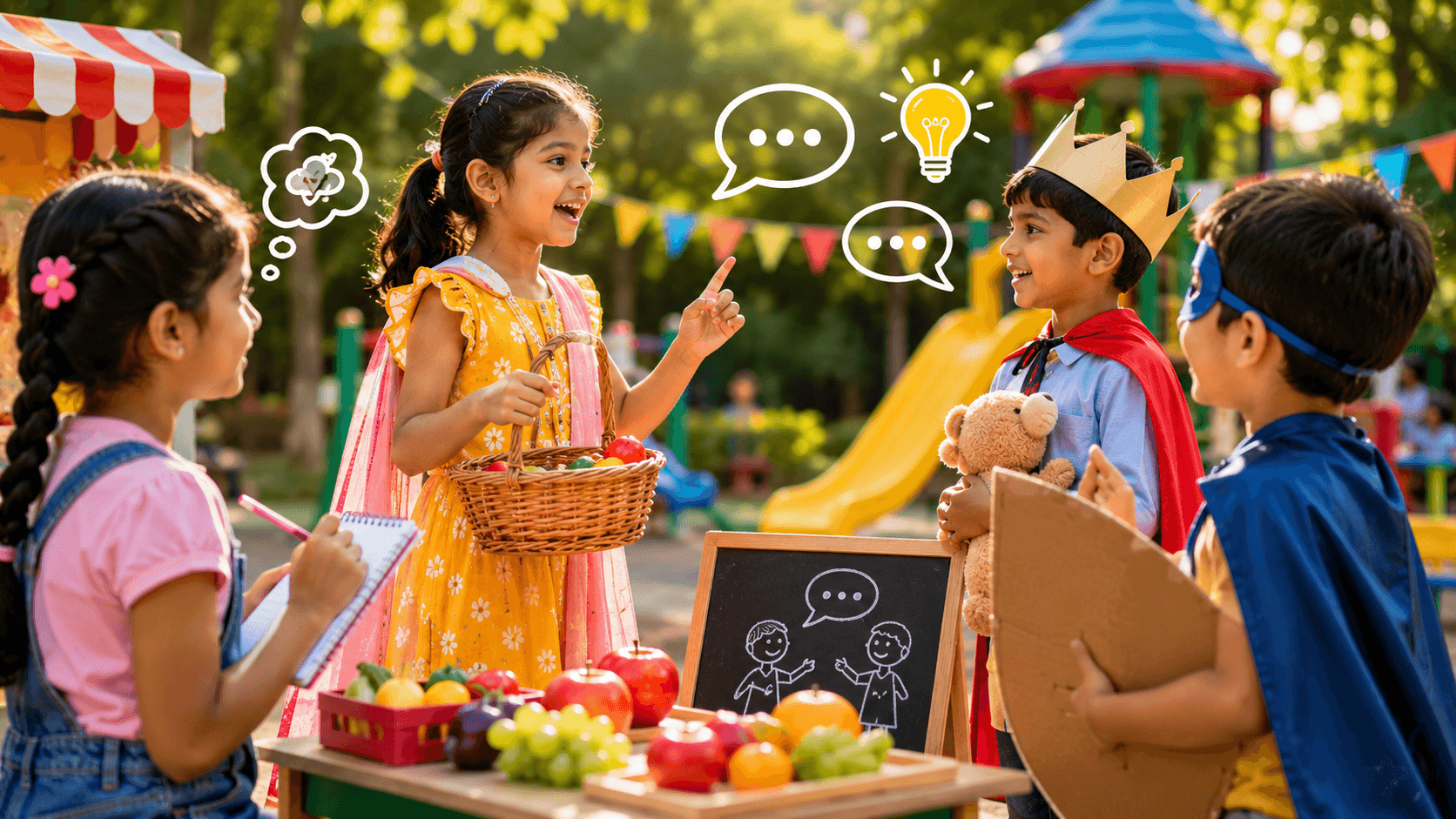
Language is one of the most important skills a child develops in their early years. While many parents focus on worksheets, grammar exercises, and vocabulary lists, research consistently shows that children learn language most effectively through play. Play-based learning creates meaningful opportunities for children to listen, speak, interact, and express themselves naturally, helping them build strong English communication skills without the pressure of traditional classroom learning.
Why Play Matters in Language Development
Children are naturally curious and learn best when they are actively engaged. Through play, they ask questions, solve problems, share ideas, and interact with others. These everyday interactions strengthen vocabulary, comprehension, sentence formation, and conversational skills.
Unlike rote memorization, play-based learning encourages children to use language in real-life situations. Whether they are pretending to run a shop, narrating a story, or explaining the rules of a game, they are constantly practicing communication.
Some key benefits of play-based learning include:
- Improved vocabulary and word recognition
- Better listening and comprehension skills
- Enhanced confidence in speaking English
- Stronger social and conversational abilities
- Greater creativity and self-expression
- Improved critical thinking and problem-solving skills
The Role of Structured English Learning
While play provides opportunities for practice, children also benefit from structured guidance that helps them understand the building blocks of language.
Younglabs' English Wholistic Development Program focuses on five essential pillars of language learning:
- Phonics
- Reading
- Listening
- Speaking
- Writing
By combining interactive sessions with personalized learning plans, Younglabs helps children develop practical communication skills that extend beyond textbooks and classrooms. This balanced approach allows children to understand language concepts while gaining confidence in using them in everyday conversations.
Educational Toys as Language Learning Tools
Play-based learning becomes even more effective when supported by thoughtfully designed educational toys. Toys that encourage exploration, imagination, and interaction naturally create opportunities for language development.
For example, educational toys help children describe shapes, colors, actions, and ideas while engaging in meaningful conversations with parents, siblings, and friends.
Montessori-inspired toys are particularly beneficial because they encourage independent learning and verbal expression. Activities such as sorting, stacking, matching, and counting help children build vocabulary while improving concentration and cognitive skills.
Similarly, sensory play experiences encourage children to describe what they see, feel, hear, and observe, strengthening both expressive and receptive language abilities.
How Pretend Play Strengthens Communication
Pretend play is one of the most powerful language-building activities for young children. When children role-play as teachers, doctors, chefs, shopkeepers, or explorers, they naturally engage in conversations and storytelling.
Through pretend play, children learn to:
- Ask and answer questions
- Use descriptive language
- Form complete sentences
- Express emotions and ideas
- Practice real-world communication scenarios
These experiences help children become comfortable speaking English in a relaxed and enjoyable environment.
Creating a Language-Rich Environment at Home
Parents can support English communication development through simple everyday activities.
Some effective ideas include:
- Reading books together and discussing the story
- Encouraging storytelling and imaginative play
- Using educational and sensory toys during playtime
- Asking open-ended questions that require detailed responses
- Introducing new vocabulary naturally through conversations
- Creating role-play activities based on everyday situations
The goal is to make language learning feel natural and enjoyable rather than something limited to study sessions.
Building Confidence Through Play and Learning
Children who learn through a combination of structured instruction and playful experiences often develop stronger communication skills. They become more confident expressing ideas, participating in conversations, and interacting with others.
When educational programs focus on reading, writing, listening, and speaking while encouraging hands-on exploration through toys and play, children gain both the knowledge and confidence needed for effective communication.
Conclusion
Play-based learning is far more than entertainment—it is a powerful tool for language development. Through storytelling, role-playing, sensory exploration, and interactive activities, children develop the confidence and skills needed to communicate effectively in English.
Programs like Younglabs' English Wholistic Development Program provide the structured foundation children need, while educational play experiences help them apply those skills naturally. Together, they create a balanced learning environment that nurtures confident, capable communicators and lifelong learners.
FAQs
1. How does play-based learning improve English communication skills in children?
Play-based learning helps children use language naturally through conversations, storytelling, role-playing, and interactive activities. Instead of memorizing words in isolation, children learn how to apply vocabulary, sentence structures, and communication skills in real-life situations, making language learning more meaningful and effective.
2. What types of play activities support language development?
Activities such as pretend play, storytelling, sensory play, board games, reading sessions, and educational toy-based learning all contribute to language development. These experiences encourage children to listen, speak, ask questions, describe objects, and express their thoughts confidently.
3. Why is pretend play important for English language learning?
Pretend play allows children to step into different roles and create conversations naturally. Whether they are acting as a teacher, doctor, chef, or shopkeeper, they practice asking questions, responding appropriately, using new vocabulary, and forming complete sentences. This helps build both confidence and fluency in English communication.
4. Can educational toys help improve communication skills?
Yes. Educational toys create opportunities for children to talk about colors, shapes, actions, numbers, and problem-solving strategies. Montessori-inspired toys, puzzles, sorting games, and sensory activities encourage meaningful conversations that strengthen vocabulary, comprehension, and expressive language skills while keeping learning enjoyable.
5. How can parents create a language-rich environment at home?
Parents can support language development by reading books together, encouraging daily conversations, asking open-ended questions, introducing new words naturally, engaging in storytelling activities, and providing opportunities for imaginative play. Consistent interaction helps children become more comfortable using English in everyday situations.