How important is creativity? Can you improve your child’s creativity?


Founder, Younglabs — partner across your child's learning journey
Engineering gold medallist · ISB Postgraduate · Building Younglabs across Foundations, Academic Excellence, University & Beyond
26 Mar 2026 · 15 min read
_____________Education
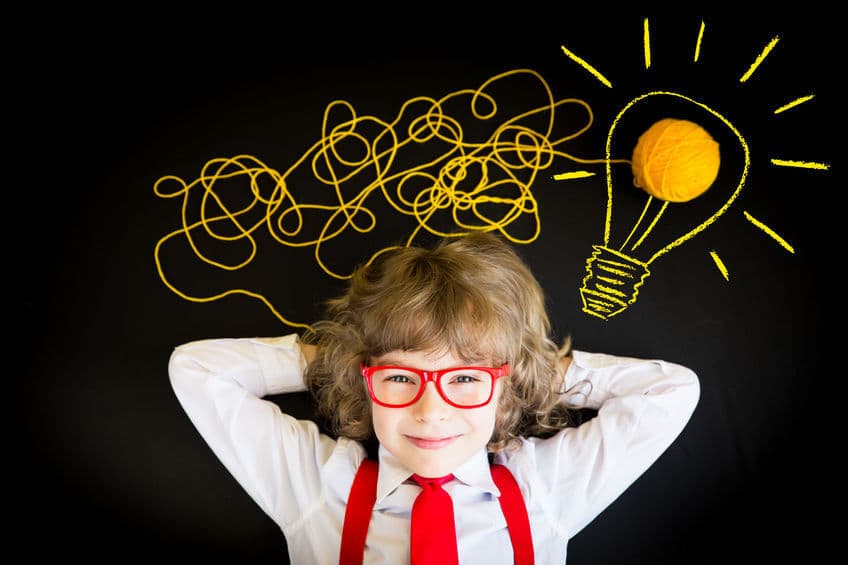
What comes to your mind when you hear the words “creative” or “creativity”? When we say he/she is creative, what do we mean? We probably mean that he/she is unique and can think out of the box. It is a form of self-expression. Children love it when they are able to express themselves freely and openly without any judgements. Perhaps images of people who express themselves freely and confidently through their work or daily life experiences; people who tend to think “outside the box” when coming up with ideas to address situations or solve everyday problems. Creativity is the ability to produce work that is original (that others have not thought of before) and that is appropriate (sensible or useful in some way). This statement was given by Berk. It is not as simple as it may appear to define creativity. As you can see from the preceding paragraph, creativity may mean different things to different people. It could be a skill like singing or dancing, or a new way of thinking or being in the world. Everyone possesses the ability to be creative. Regardless of one's own experiences with creativity, it is a trait that can be nurtured and developed.
The value of creativity in education is regarded as a critical 21st-century ability. The G-20 summit in Toronto is now completed, and one of the conference's findings was that countries must establish an environment that supports creativity in order to attract investors. Creativity is one of the buzzwords of this decade, appearing in everything from politics to business to education to sports. We used to think that painters, musicians, and writers were the only ones who could be creative. We're finally waking up to the fact that creativity is required in every aspect of modern life. The expansion of information and technology, as well as cyber-communication and globalisation, are changing the way we learn, do business, and develop connections with one another. Things change so quickly in the twenty-first century that you'll need to use your creativity just to stay alive (much alone thrive!). This is due to the fact that there are no longer any guidelines for moving forward as a company, a community, or a person.
Many people equate creativity with gifted and talented individuals. Few would deny that Steve Jobs' ingenuity was instrumental in the development of the iPhone and other ground-breaking Apple products. Creativity is not limited to only those who are very intelligent. All children are not equally creative, just as not all children are equally clever. Intelligence is not the same as creativity. It is not necessary for a highly intelligent person to be creative.
There is no evidence of a link between the two, according to studies. The way of thinking, rather than the amount of intelligence, governs creativity. Creativity, on the other hand, necessitates some level of intelligence.
Creativity is the most important skill in the world. Let’s see why:
- New thinking is the most significant outcome of creativity. You will come up with solutions that no one else has thought of if you can utilise your imagination to see issues and ideas in new ways.
- Creativity can lead to an increase in happiness. If you know there are multiple methods to accomplish a goal, you know there will always be a way. You can be confident in your ability to discover a solution.
- Creativity can lead to increased self-assurance. When you allow yourself to generate a large number of ideas, you will discover that some will be excellent and others will require improvement. You will gain confidence in your capacity to continue generating ideas, and you will realise that this is all that matters.
Creativity and critical thinking sit atop most lists of skills crucial for success in the 21st century. Creativity and critical thinking are prominent on numerous lists of 21st-century skills, in part because they are human abilities that machines and AI are unlikely to supplant anytime soon. These talent compilations paint a picture of the near future in which people must compete against their own inventions by utilising the most human of human qualities: empathy, willingness to collaborate, adaptability, and ingenuity. As the twenty-first century progresses, creativity and critical thinking appear to be crucial human characteristics for avoiding our own obsolescence.
So we’re pretty much clear how important creativity is! Now let’s discuss how parents can increase or improve children’s creativity. There are many possible ways in which a child’s creativity can be improved. Let’s dig into it a bit.
- Allow the youngster to freely explore and play in an atmosphere free of limitations.
- Instead of trying to organise the child's thoughts to fit the adult's, adapt to their ideas.
- Suspend judgement of children's diverse problem-solving and accept odd suggestions from them.
- Incorporate creative problem-solving into every aspect of the curriculum. Make use of problems that arise organically in everyday life.
- Allow time for the kid to investigate all options, progressing from popular to unique ones.
- Instead of focusing on the product, emphasise the process.
On being asked a few questions to parents about creativity, the parents answered this –
According to them, creativity is an art or a form of art. And it’s present in every human being. When someone creates something of their own, that’s known as creativity. But creativity should not be forceful. It should come from the inner self of a child. It comes automatically if a child is creative hence if we try to create creativity forcefully, that can have a bad impact. So, whatever creativity comes from within a child, we should respect it so that it can help the child in future. Being a parent they should give their children enough scope. Some say when a child creates something from his/her own mind that’s creativity. Anything which is created by using his/her own intelligence like a design, a recipe etc. that can be said as creativity. To show someone’s imagination is creativity, it is the innate ability of a person. It is very important as it helps to develop one’s personality and own identity. No creativity means no identity.
Some parents say that creativity is inborn, on the other hand they say it can be developed later. Others say that the skills which a child has is inherent but later that skill can be developed as well. When a child shows interest in a specific area that area of that child can be nurtured. If their parents used to sing songs before the child is born, or the birth giver listens to a lot of songs it is most likely that the child will also develop a habit of singing. So like this 50% can be inborn or inherent but the rest 50% can be developed according to their interest. We cannot see creativity immediately after a child is born. Creativity changes or can change according to the growth and age of a child. According to others creativity is 20% inborn but we can develop it by ourselves as well. Others are unsure if it is inborn but they are pretty much sure that it can be developed.
EXPERTS VIEW
According to the expert, creativity is a very subjective word. It’s the ability to think beyond the normal, to solve a problem quickly as soon as it arises suddenly. But to be creative, the person should have some sort of knowledge as well because without that the person will not be able to think beyond the line. Creativity as it comes from within, children are more creative because they don’t think what others will think about the idea given by them. They are not scared of criticism. Some children are definitely more creative than others. Everyone is not the same. Also sometimes children come up with such great ideas, that makes the adult think ‘how could we not think about it before”. There is no blockage in their mind or any kind of apprehension. It is very very important to be creative because otherwise there would be nothing that would be coming up that would be new. It is a broadening of ideas, to think beyond the normal. Without creativity it will result in an all round stagnation. No new ideas or solutions would be there. Creativity means adaptability. It is a skill that can be developed. We cannot train a person by giving them theories on being creative. But the inherent trait is more defining. A person who is inclined towards creativity will be more into it than a person who is totally tained. So we can develop creativity to some extent. By giving them more exposure we can improve children’s creativity, let them experience things. To encourage them to think out of the box. The children should not be nervous. Because creativity can also be lost in a child due to the kind of exposure the child is being exposed to. For example, in a classroom, a child had the tendency to write or frame the answer in his/her own words but he/she was being told to write exactly what the teacher told. Like word by word. This is called parrot learning. Like this gradually a child tends to lose his/her creativity due to limitations. Apart from art and craft, creativity can be applied to cooking, filming, theatres. Acting is something which should come from within. When we deliver a dialogue, the emotion should come from within. It is very creative. Writing can be very creative and technology being the greatest help these days, it is the work of the creative minds out there.
As a result, it's no leap to suggest that creativity is the single most critical skill for all business executives to learn today. Artificial intelligence's ultimate moonshot could be creativity. AI has already aided in the creation of pop ballads, imitated the techniques of famous painters, and inspired creative filmmaking decisions. Experts wonder how far AI should or should go in the creative process.
Automation is now commonplace, allowing users to complete a variety of chores ranging from ordering pizza to checking bags at the airport, booking a hotel room, and even scheduling a doctor's visit. It's no different in the customer service industry. Commoditization is the root of the problem. Almost everything that can be automated has been or will be automated in the near future, which reduces the number of process-oriented jobs.
Artificial Intelligence
Artificial intelligence has the potential to significantly increase the efficiency of our workplaces while also augmenting the job that humans can accomplish. When AI takes over mundane or dangerous duties, it frees up the human labour to focus on tasks that require creativity and empathy, among other skills. People's happiness and job satisfaction may enhance if they are doing work that they enjoy. With the introduction of autonomous transportation and AI affecting our traffic congestion concerns, not to mention the various ways it will boost on-the-job productivity, our society will gain countless hours of production. Humans will be able to spend their time in a variety of ways now that they are no longer bound by uncomfortable commutes.
Now to motivate you, I’m going to write about an individual who developed her creativity and in the end became extremely successful. She’s none other than J K Rowling.
J.K. Rowling is a dedicated worker. Joanne is unflappable in the face of adversity. She had been denied several times before being accepted by Bloomsbury when she was trying to get Harry Potter and the Philosopher's Stone published. She also had to devote a significant amount of time to the composition of her books. She put in so much effort that her pieces have earned numerous accolades and awards. J.K. Rowling is also a huge fan of her own work. Joanne was so confident in her first Harry Potter book that she refused to give up when it was rejected. Being well-educated also aids in the impact of others. With her creative writing and thinking she is one the greatest examples of being a creative person. She inspires a lot of people with her creativity.
10 Creative action plan -
Encourage – Possibility thinking
When parents ask their children “What if?” in as many different ways as possible, they are naturally encouraging them to consider creative alternatives. This necessitates a move away from more traditional ways that encourage youngsters to inquire, What is this and what does it do? in favour of What can I do with this? For example, if you ask a child to play with a ball, she/he’ll get a ball and start playing with it. But if you ask him/her “what if” there’s no ball in there, how will you play? At that time, she/he'll think of other possible ideas or toys with which they can play or something which could be played as a ball.
Nurture – Child’s interest
Children's creativity blooms when they are energised by activities they enjoy. Allow them to pick their own activities after school. Encourage them to delve deeper into such activities in school essays and projects. If your child enjoys playing the flute, for example, encourage him to do a school project on the history of flute playing or the mechanics of flute construction.
Expand language of imagination - Play
If you want to know what's going on in your child's world, one way to do so is to play with him or her. When children's imaginations are active and they are involved in pleasant, playful situations, they are more likely to share and chat. Their first language is play, and toys are their first words.
Benefits of playing – Play encourages creativity
We've been conditioned to think of creativity as something reserved for the world's artists. Children who are drawn to music and art are generally labelled as creative, yet children who play are just as creative as those who paint all day.In order to be creative, you must use your imagination and think beyond the box. Children discover new ideas and interests through imaginative play. They build little replicas of the world around them, as well as the worlds they imagine.
Art – Fosters creativity
Consider home art projects as tools for nurturing creativity rather than as finished works to be appreciated. Children can learn from chaos and disorder through art, which taps into an underlying and often unseen reservoir of creative ideas. Every field has creativity so when a child is given the opportunity to be trained in his/her interested area, it really helps them a lot. After the child reaches a particular age, the parents can give them training from their end or else from other guides or from school’s activities or outdoor activities to nurture their child’s creativity. Since now the situation of the country is not good enough and everything is getting done online, so the parents’ can make their child read books, make creatures from clay, make them paint, make them do whatever they like doing as a hobby, giving them home works like crafting etc. and giving more importance to what they like to do at home.
Nature – Explore
The outcomes are wonderful when children and nature collide! Children acquire critical thinking skills. .In general, creativity is connected with the generation of ideas, whereas critical thinking is associated with the evaluation of such ideas. In practise, though, the two are difficult to distinguish. As parents and teachers are well aware, uncritical creativity tends toward the whimsical, the impractical, and the ludicrous. “Creative thinking” has become a polite way of suggesting that someone's ideas have gotten out of hand. In ways that books cannot teach, they learn through tasting, touching, and witnessing wildlife and flora. So when a child is exposed to the outer world creativity increases because children are mostly compact with their parents so once they start connecting with the outer world and once they become independent their creativity will automatically increase through knowledge.
Daydreaming – not a bad thing
Kids explore associations, build connections, and look for possibilities while they daydream. Daydreaming is lauded by psychologists. While it may appear to the outside observer to be a source of distraction, zoning out in your own internal world is beneficial. It can aid in the planning of the future, the generation of ideas, the regulation of emotions, and the stimulation of creativity.
Creativity – Source of joy
Children learn to enjoy their inherent, creative gifts as human beings when their families value and accept creativity as a source of inner joy. The child should be given the opportunity to do whatever they like. If a child likes to do a certain thing like a hobby from 2-3 years of age, it is parents’ responsibility to acknowledge them and encourage them to do it. The parents should notice where the interest of their child lies. The parents should be supportive and listen carefully to their children.
5 habits of mind
Nurture the attitudes of mind that generate creativity. Research by Jane Piirto, Distinguished Professor at Ashland University in Ohio, suggests there are five core attitudes of creative people:Self discipline,Openness to experience,Risk-taking,Tolerance for ambiguity,Group trust
Support
Lastly, you should support your children and give them opportunities to explore where their creativity lies and train them in that field.
Creativity is a state of mind. Creativity isn't some enigmatic occurrence that occurs only once in a while. It's a mental state. Many people say that creativity comes and goes, leaving them for months at a time. This is due to the fact that they only reach the creative state of mind once every few months.
Love what you’re doing. The thing which you do should be loved by you otherwise creativity cannot take place. If you’re doing something unwantedly then it’s difficult to channel your creativity. So no matter what you do, you should love it. You shouldn’t do something just because of money or just because your boss told you to. So in order to channel your creativity you should do what you love.